

How Much Does an Electric Patio Heater Cost to Run?
Electric patio heaters are cheaper than gas models and require a lesser amount of the electricity. However, the amount they'll cost you to run will be contingent on their wattage as well as the setting they're used on.
They don't emit carbon monoxide, making them ideal for windy locations, and you can even control them via your home automation system.
Flexibility
Contrary to gas patio heaters which tend to be large and need to be placed near a power source, electric patio heating is a more flexible alternative. It is compact and can be mounted on the wall or freestanding. It features a halogen lamp and a reflector integrated that helps distribute heat evenly. It also features two different temperature settings, which allow you to control the level of warmth to suit your needs.
Electric patio heaters are much more energy efficient than gas models. The amount of electricity used by a model will be contingent on the wattage it has and the level you set for it. It is generally better to select a model that has a lower wattage, as it is more efficient in energy use and cost-effective. Some models are designed to create a warm and cozy atmosphere instead of just heating the surrounding area. This can reduce your energy consumption.
Some models are made to be resistant to rain and can be used outside even in a wet climate. These models are made from stainless steel or other waterproof materials. They have a stable base and are often constructed from a durable material that is able to withstand the most severe conditions. Many come with an remote that allows you to adjust the temperature and set the timer.
Another benefit of electric patio heaters is their mobility. Electric patio heaters are less bulky than gas heaters, and can be moved to accommodate the seating arrangements of your outdoor dining space. Some can even be mounted on poles, allowing you to add an element of style to your backyard or seating area without occupying valuable space on the floor.
Certain models also employ infrared technology to create the illusion of a glowing warm sun. This can add a fashionable aspect to your outdoor space. This is especially beneficial when you're looking to create an intimate atmosphere when it's raining or at night. Infrared heating is an excellent choice for outdoor areas in commercial settings because it can create a warm environment to customers.
Safety
If you follow the safety basics and guidelines, an electric patio heater can transform your outdoor space, and help you take advantage of the outdoors even if the temperatures fall. Make sure the area in which you intend to put in a heater is well ventilated and has enough space between it and any flammable objects like curtains or furniture. Keep a fire-extinguisher near you in the event of an emergency.
You should never leave a gas or propane heater unattended, regardless of whether it's electric or not. Carbon monoxide and other toxic gasses can be fatal when inhaled in high doses. In addition, they generate plenty of heat which can cause burns when they come in direct contact with your skin.
Electric heaters, on the other hand emit heat in a concentrated manner making them safer to use. However, the type of patio heater you pick will depend on a range of factors, such as its size and the proximity to other people. If you're concerned about your patio heater being in close proximity to pets or children, opt for a model with the child security locking system.
Check that the patio heater's power cord is protected by an RCD (residual-current device) which protects you from dangerous electrical shock. Make sure the socket in which you intend to plug in the heater is protected by the same level protection. Also make sure you do not use extension cords that are not specifically designed for outdoor use.
Also, you should be sure to read the instructions thoroughly to avoid any electrical accidents. Contact the manufacturer should you have any concerns about the safety of your heater for your patio. Registering your heater online is an excellent way to be contacted in case of safety issues.
The type of patio heater you pick will depend on both your budget and requirements. If you're looking for a flexible option, choose an electric heater that has different temperature settings. This allows you to lower the temperature when you don't require it and save energy. You can also purchase a cover that will protect your heater against the rain.
Durability
A patio heater that is electric is a great way to keep your garden or terrace warm and inviting throughout the year. patio heater electric creates a soft warmth that resembles the sunlight's warm rays. They also emit a soft glow that creates a warm atmosphere after dark. They're perfect for sipping an evening drink with your friends or reading a book during the afternoon.
The best electric heaters are made from high quality materials and are built to last, so they'll last even after years of continuous use. They are also cheaper than gas-powered models, making them a more budget-friendly choice. They're offered with a range of different features to suit your needs, such as timer functions and different temperatures. Some models come with a remote control, so you can alter the temperature without getting up from your chair.
A high-quality heater will last for a longer time if it is regularly maintained and cleaned. It is essential to clean regularly the front glass and the metal components to prevent corrosion. Similarly, you should always make sure that the bulb is replaced as it wears out as a cheaper bulb is not as efficient as a higher-quality halogen lamp.
A heater that has been approved and tested by an independent authority is guaranteed to be safe. This is usually marked by the 'CE' symbol on the product, or by a label attached to the packaging. This information should be available from a reputable vendor prior to purchasing.
Electric patio heaters are easily installed, and require no maintenance. This makes them a favorite choice for a large number of people. Electric patio heaters can be put in many different locations and easily moved, unlike gas heaters which are fixed to the floor or wall and are only utilized in certain areas of the garden, or in a pergola.
Affordability
Electric patio heaters are more affordable to run than gas heaters because they don't require a huge fuel tank. They can also be put in conservatories or garages as long as the heater is plugged into an outdoor power source. If you are concerned about your energy consumption and its impact on the environment, choose one that has a low wattage, such as the Ecostrad Apex. This model has five energy settings that range from 1200 watts for hard-to-heat areas to 2000 Watts for a large space, and is available in black or white.
The best electric patio heaters are stylish additions to any conservatory or garden There are a myriad of designs that boast elegant and sophisticated features. The Maze Living Lyra Freestanding Electric Patio Heater, for instance, features a lovely lantern design and stunning aluminium and stainless-steel finish that adds interior style to your outside space. The Kettler Kalos Copper model has a similar appeal with its stunning copper trim and single frost halogen lamp and its impressive 2kW power capacity is ideal for heating larger areas.
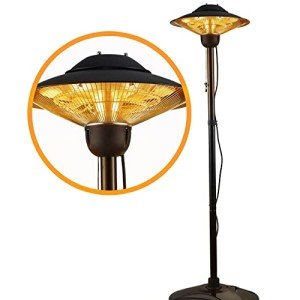
It is also important to consider whether you prefer a freestanding or table-mounted model. You can also choose a wall-mounted model for more flexibility. Based on your budget you may be interested in choosing an electric heater with integrated lighting and Bluetooth speakers to create the ultimate party atmosphere.
A high-quality, well-constructed patio heater will last for a long time and will be backed by a solid warranty. Be sure to look for one that has a sturdy base and a protection guard for the bulb in order to prevent accidental damage and avoid any fire-related hazards. Find a bulb that has a shortwave infrared bulb and reflective surfaces inside the housing. This will increase the amount of heat produced. They're more effective in the wind than medium and longwave infrared, which can be blown away by wind.